Hacking the Asian Waves -Culture Future Lab Sprint Activities
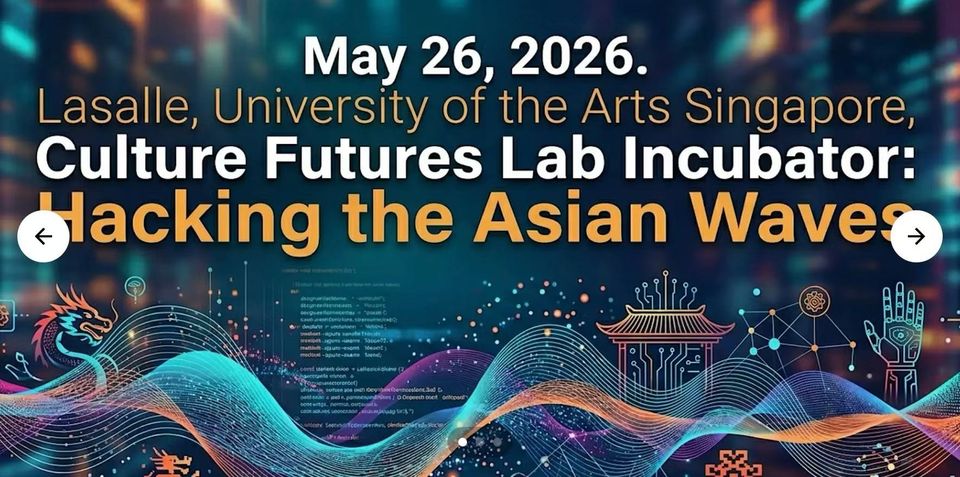
I attended the Culture Future Lab activities yesterday. As three sprints were conducted simultaneously, I chose to participate in the China group, as it was the only one directly related to VR.
In the China sprint, participants mainly used Meshy to generate 3D models from images, transforming traditional Chinese cultural symbols into 3D forms. Compared to professional 3D modeling software such as Maya or Blender, Meshy offers limited editing capabilities; however, it is effective for quickly capturing and visualizing ideas. The generated models can then be imported into a Meta headset, where Open Brush allows for real-time creation. During this process, participants can reinterpret traditional cultural symbols and embed their own cultural narratives into them. Overall, this sprint provided a relatively introductory-level experience.
For reference, here is the promotional material for Sprint 1:
https://www.canva.com/design/DAHGztPmoU8/PnaKR6vv_gi_ORwm5qerSA/view?utm_content=DAHGztPmoU8&utm_campaign=designshare&utm_medium=link2&utm_source=uniquelinks&utm_id=hac4af4f62a
In addition, I briefly joined the Japanese animation sprint, although my participation time was limited. The sprint was led by Dr. Sheuo Hui Gan and Professor Magnus Pfeffer, and many familiar participants attended.
This sprint explored how anime visual design elements can be integrated with everyday scenes. By recombining anime elements with ordinary settings, participants investigated different narrative possibilities and how these transformations could reshape emotional and spatial perceptions of familiar environments. I believe this project has strong potential for studying how character design influences human perception of space and emotion. This sprint is part of Professor Magnus Pfeffer’s Japanese Visual Media Graph project:
https://jvmg.iuk.hdm-stuttgart.de/
The AI-generated images used in this sprint can be explored here:
https://mediagraph.link/clash/index.html?button=yes
You can experiment with the controls on the left to generate different results.
The Korean sprint also appeared very interesting. It is part of Associate Professor Natalia Grincheva’s research project, although I did not have the opportunity to participate. More information can be found here:
https://datatopower.net/hallyu
For more information about Culture Futures Lab, please see:
https://culturefutures.net/



Comments ()